Blockchain is one of the most talked-about technologies of the decade — yet most people still can't explain what blockchain technology actually is beyond "something to do with Bitcoin." In 2026, that gap matters more than ever: banks are testing it, the Indian government runs live blockchain systems for land records and GST, and global regulators are writing new rulebooks around it every few months.
This guide is on blockchain technology, its history, how it works, types of blockchain, blockchain rules, tax, benefits & risks, etc.
What is Blockchain Technology?
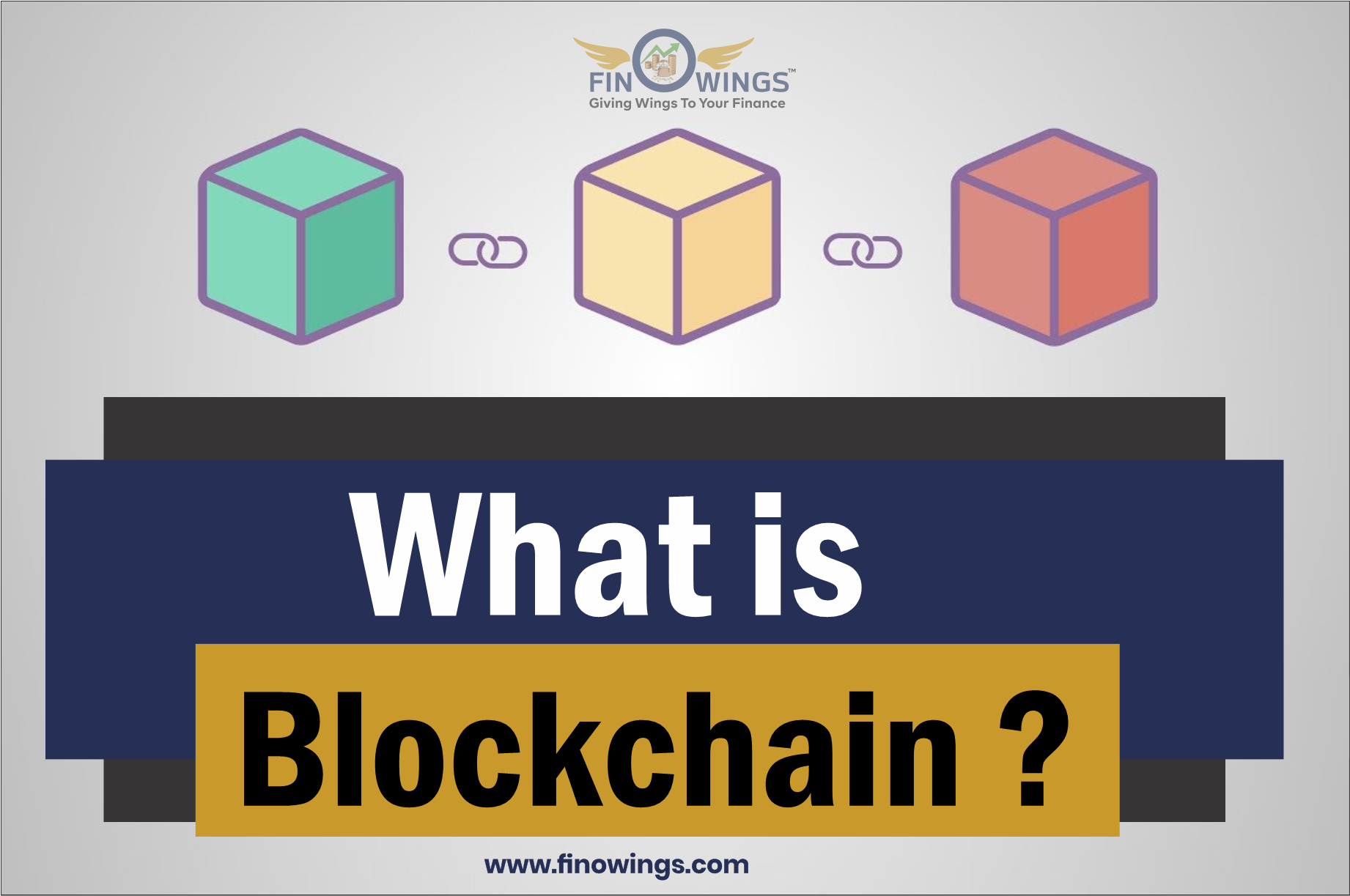
Blockchain technology is a decentralized digital ledger that records data — usually transactions — in blocks that are linked together in a chronological, tamper-resistant chain. Instead of one central authority (like a bank or government server) holding all the records, copies of the ledger are distributed across thousands of computers (called nodes).
Once a block of data is added, it cannot be altered without changing every block after it — which is practically impossible on a large network.
In one line: blockchain is a shared record book that no single person controls, and that nobody can secretly edit.
This is the core of the decentralized ledger explained simply — no central "boss" database, just a network of copies that all agree with each other.
A Short History: How Blockchain Evolved
- 1979: Computer scientist Ralph Merkle patented the "Merkle tree" — a way of linking data using cryptographic hashes. This is the mathematical backbone that later powered blockchain.
- 2009: The Bitcoin blockchain went live — the first real-world blockchain.
- 2020s onward: Blockchain moved into supply chains, healthcare, government records, and finance, while DeFi and NFTs pushed it further into the mainstream.
- 2026: Blockchain has matured into infrastructure — real-world asset tokenization, AI integration, and government-run blockchain systems (including in India) are now operational, not experimental.
How Does Blockchain Work? (Step-by-Step)
If you're wondering how blockchain works, here is the process broken into five simple steps:
Step 1: A Transaction is Initiated
Someone sends money, transfers ownership of an asset, or records data. This request is broadcast to the network.
Step 2: The Transaction is Verified
Computers on the network (called nodes) check the transaction against the network's rules — is the sender valid? Do they have enough balance? No single company makes this decision; it's collective.
Step 3: Transactions are Grouped into a Block
Verified transactions are bundled into a "block," along with a timestamp and a unique cryptographic fingerprint called a hash. Many blockchains use a structure called a Merkle tree to organize these transaction hashes efficiently, so nodes can verify individual transactions without downloading the entire block.
Step 4: The Block is Linked to the Chain
The new block's hash includes data from the previous block's hash — this is what creates the "chain." If anyone tries to alter old data, the hash changes, breaking the link and instantly flagging the tampering to the entire network.
Step 5: The Ledger is Updated Everywhere
The new block is copied to every node in the network almost instantly. Every participant now has the same, updated version of the ledger — decentralized, transparent, and (near) impossible to fake.
Blockchain Basics: Key Components You Must Know
To really understand blockchain basics, you need to know these four building blocks:
- Distributed Ledger— The shared database itself, copied across every node in the network.
- Nodes— The individual computers that store a copy of the ledger and help verify transactions.
- Consensus Mechanisms— The rules nodes follow to agree on what's valid. The most common:
- Proof of Work (PoW): Nodes ("miners") solve complex puzzles to validate blocks — used by Bitcoin. Energy-intensive but highly secure.
- Proof of Stake (PoS): Validators lock up ("stake") cryptocurrency as collateral to validate blocks — used by Ethereum since 2022. Far more energy-efficient.
- Delegated PoS / Proof of Authority: Faster variants used by many enterprise and newer blockchains in 2026.
- Smart Contracts— Self-executing code stored on the blockchain that automatically runs when pre-set conditions are met. Example: a smart contract could release an insurance payout automatically the moment a flight is confirmed delayed, with no paperwork or claims agent involved.
- Public Key Cryptography— Every user gets a public key (like an account number others can see) and a private key (like a password only they know). This proves ownership and authorizes transactions without needing a bank to vouch for you.
Is Blockchain Safe? What Makes It Secure
Is blockchain safe? For the most part, yes — but "safe" needs some nuance. Blockchain security comes from three combined mechanisms:
- Decentralization— Data isn't stored in one place, so there's no single point of failure. Hacking the network means compromising a majority of nodes simultaneously — extremely difficult on large, established blockchains.
- Cryptographic hashing— Every block is mathematically fingerprinted. Change one character of data, and the entire hash changes, instantly exposing tampering.
- Consensus— The majority of the network must agree before anything is added or changed, making unilateral manipulation nearly impossible.
Can blockchain be hacked? The underlying blockchain protocol itself (like Bitcoin's or Ethereum's core chain) has never been successfully hacked at scale. However, weak points do exist elsewhere in the ecosystem — poorly coded smart contracts, centralized exchanges, and individual wallets have all been hacked. So the honest answer: the blockchain itself is extremely secure; the apps and platforms built on top of it can still have vulnerabilities.
Types of Blockchain
There are four main types of blockchain, each suited to different needs:
|
Type |
Who Controls It |
Access |
Best For |
|
Public Blockchain |
No one (fully decentralized) |
Anyone can join |
Cryptocurrencies (Bitcoin, Ethereum) |
|
Private Blockchain |
Single organization |
Restricted/invite-only |
Internal enterprise data, banks |
|
Consortium Blockchain |
Group of pre-selected organizations |
Restricted to members |
Cross-border banking, supply chains |
|
Hybrid Blockchain |
Mix of public + private rules |
Selective (some public, some private data) |
Businesses needing partial transparency |
Blockchain vs Cryptocurrency vs Bitcoin vs NFT
This is one of the most searched confusions around this topic, so here's a clear blockchain vs cryptocurrency breakdown:
|
Term |
What It Actually Is |
|
Blockchain |
The underlying technology — a decentralized ledger system |
|
Cryptocurrency |
A digital currency (like Bitcoin, Ethereum) that runs on a blockchain |
|
Bitcoin |
One specific cryptocurrency; the first major application of blockchain |
|
NFT |
A unique digital token (proof of ownership) recorded on a blockchain |
|
Smart Contract |
Automated code that runs on certain blockchains (like Ethereum) |
Think of it this way: blockchain is the road, cryptocurrency is one type of vehicle that drives on it. There are many other vehicles too — NFTs, smart contracts, tokenized assets, and enterprise applications that have nothing to do with buying or trading currency at all.
Blockchain vs a normal database: In a regular database, an administrator can edit or delete any record. In blockchain, no one — not even an admin — can delete a past entry; you can only add a new correcting entry, and both remain visible forever.
To start trading in crypto, open a crypto account with Delta Exchange.
Blockchain Technology Examples & Use Cases (2026)
Blockchain has expanded far beyond crypto. Here are real, named blockchain technology examples across industries:
Finance: Singapore Exchange Limited uses blockchain to run a more efficient interbank payment system, cutting down on manual reconciliation of thousands of transactions.
Supply Chain & Retail: Home Depot uses blockchain to resolve vendor disputes and improve supply chain transparency. Retailers use similar systems to verify product authenticity from manufacturer to shelf.
Media & Entertainment: Sony Music Entertainment Japan uses blockchain to manage digital rights and royalty payments more efficiently, ensuring artists are paid accurately.
Energy: Blockchain-based peer-to-peer platforms let homeowners with solar panels sell excess energy directly to neighbours, with smart meters automatically recording and settling transactions.
Healthcare: Hospitals are piloting blockchain to secure patient records while still allowing controlled, auditable data-sharing between providers.
Government (India-specific): India runs some of the most practical real-world blockchain deployments globally through the Ministry of Electronics & IT's Centre of Excellence in Blockchain Technology:
- Land Registration Chain— used in states like Andhra Pradesh and Telangana to prevent land record tampering and fraud.
- Blood Bank Chain— tracks blood donation and distribution transparently to prevent shortages and mismanagement.
- Public Distribution System (PDS) Chain— improves transparency in the distribution of subsidised food grains.
- GST Chain— aims to reduce tax fraud through tamper-proof invoice tracking.
- Judiciary Chain— secures and timestamps legal documents and case records.
These government systems prove blockchain isn't just theory — it's already running at scale for real Indian citizens.

Blockchain in India: Rules, Tax & Digital Rupee (2026)
Most global guides ignore this completely, but if you're in India, this is the part that actually affects you in 2026:
- Virtual Digital Assets (VDA): Cryptocurrencies, NFTs, and blockchain tokens are legally classified as VDAs under the Finance Act, and taxed at a flat 30%, with 1% TDS on transactions. Losses cannot be offset against other income.
- FIU-IND Registration: All crypto exchanges operating in India — including offshore ones — must register with the Financial Intelligence Unit (FIU-IND) and follow strict KYC/AML rules. Unregistered platforms have faced blocks and show-cause notices.
- Stricter Reporting (from April 2026): Exchanges now face daily fines for inaccurate transaction reporting, as India tightens compliance.
- Digital Rupee (e₹): The RBI's own blockchain-based Central Bank Digital Currency is no longer just a pilot — by 2026 it's being used to route parts of India's welfare payments across several states, aiming to reduce leakage and improve transparency.
- Proposed Crypto Regulation Bill: A dedicated bill defining asset classes and licensing rules is under discussion, alongside a separate proposal that could restrict private cryptocurrencies while keeping the door open for regulated digital assets.
- Global Alignment: India is aligning its framework with FATF guidelines and the OECD's Crypto-Asset Reporting Framework (CARF) for cross-border tax data sharing, expected from 2027.
The bottom line for India in 2026: blockchain technology itself is fully legal and actively used by the government, but private cryptocurrency remains heavily taxed and closely monitored — while the RBI pushes its own blockchain-based currency as the "approved" alternative.
Blockchain 2026: What's New and What's Next
Here's what's actually shaping blockchain 2026 beyond the basics:
- Real-World Asset (RWA) Tokenization: Real estate, bonds, commodities, and even artwork are being converted into tradable blockchain tokens, letting investors buy fractional ownership. This market has grown from roughly $5 billion in 2022 to well over $36 billion in 2026.
- AI + Blockchain Integration: AI now handles real-time valuation, predictive analytics, and automated compliance checks on top of blockchain's tamper-proof data layer — a combination increasingly used in supply chains and finance.
- Zero-Knowledge (ZK) Proofs: A privacy technology that lets someone prove a transaction is valid without revealing the underlying data — now moving from research into real enterprise use for identity and confidential finance.
- Blockchain-as-a-Service (BaaS): Cloud providers now offer ready-made blockchain infrastructure, so businesses don't need to build networks from scratch.
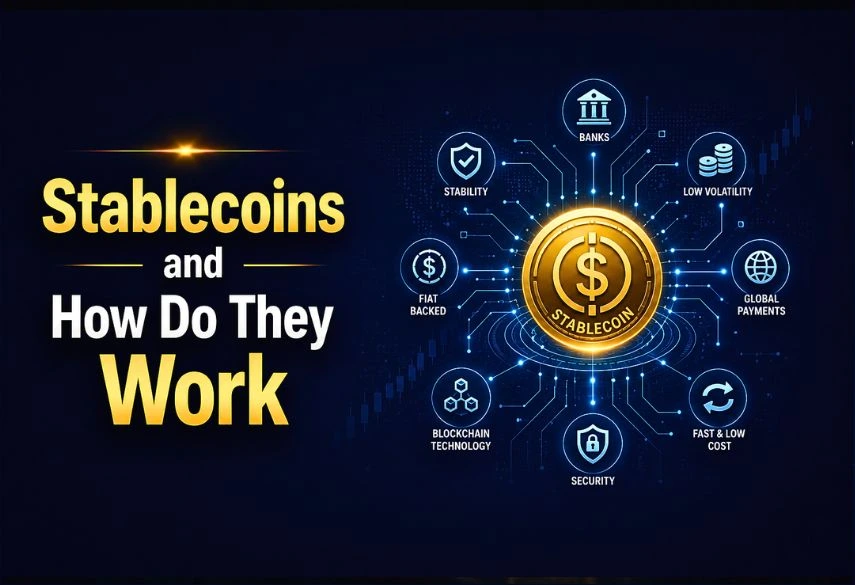
- Stablecoin Regulation: New frameworks globally (like the U.S. GENIUS Act requiring 100% reserve backing for stablecoins) are pushing stablecoins toward mainstream, regulated use.
- Institutional Adoption: Analysts widely expect 2026 to bring deeper institutional adoption and clearer regulation across major markets, moving blockchain further from speculation and closer to infrastructure.
Benefits and Limitations of Blockchain
Benefits:
- Removes middlemen, cutting costs and delays.
- Creates transparent, auditable records.
- Extremely difficult to tamper with once data is recorded.
- Enables faster cross-border and peer-to-peer transactions.
- Automates processes through smart contracts.
Limitations:
- Scalability: Public blockchains can be slower than centralized systems at very high transaction volumes.
- Energy use: Proof-of-Work networks (like Bitcoin) consume significant electricity, though newer consensus models are far more efficient.
- Regulatory uncertainty: Rules are evolving fast and differ hugely by country.
- Irreversibility risk: Since data can't be deleted, mistakes (like sending funds to the wrong address) usually can't be undone.
- Technical complexity: Still a steep learning curve for average users and smaller businesses
Blockchain Glossary for Beginners
- Node: A computer that stores a copy of the blockchain ledger
- Hash: A unique cryptographic fingerprint for a block of data
- Wallet: A tool (software or hardware) used to store and manage private keys
- Gas Fee: A transaction fee paid to process an action on certain blockchains (like Ethereum)
- Fork: A split in a blockchain's rules, creating two separate versions
- DeFi: Decentralized Finance — financial services (lending, trading) built without banks, using blockchain.
Conclusion
In 2026, blockchain has moved far beyond Bitcoin — powering everything from India's government land records and the Digital Rupee to real-world asset tokenization worth billions globally. Understanding its meaning, workings, types, and safety is now essential, whether you're a beginner or an investor navigating this fast-changing space.
As regulations tighten and adoption grows across finance, government, and enterprise, blockchain is quickly becoming core infrastructure rather than just a buzzword.
(Sources: IBM, Amazon, Blockchain, Legal Service India, Coindcx)

DISCLAIMER: This blog is NOT any buy or sell recommendation. No investment or trading advice is given. The content is only for educational purposes. Always discuss with your SEBI-registered financial advisor for investment-related decisions.